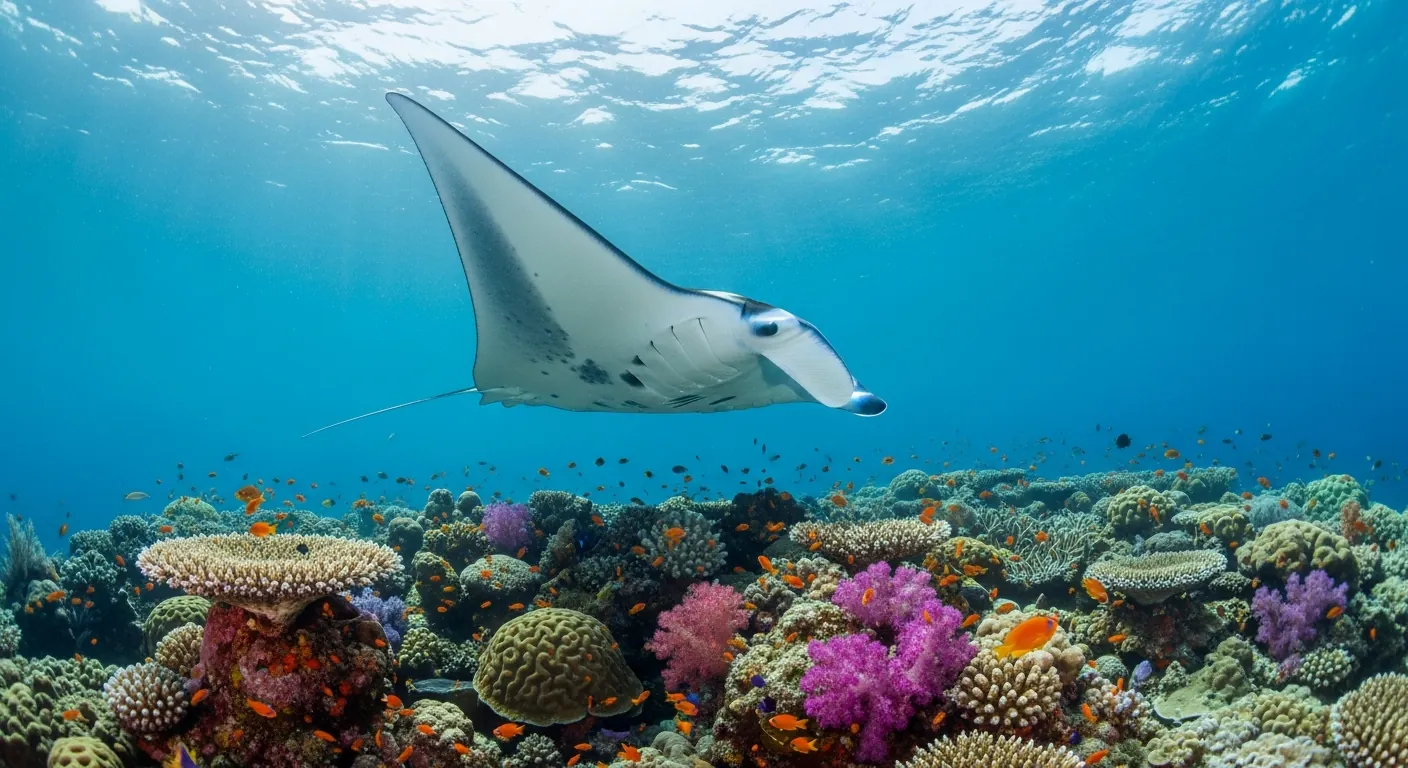
The rhythmic surge of the Celebes Sea against coral fragment shorelines defines Sangalaki, a low-lying island where the primal cycle of life unfolds daily. Beneath the surface, the water column teems with activity, a silent ballet of marine megafauna and intricate reef ecosystems, drawing marine enthusiasts to its remote reaches.
Sangalaki Island: A Hub for Manta Ray Encounters
Sangalaki Island is internationally recognized as a prime manta ray habitat and popular diving destination in the Derawan Islands. These pelagic giants, predominantly the reef manta (Mobula alfredi), frequent the island’s waters year-round, with peak sightings typically occurring between March and October. Divers congregate at specific cleaning stations and feeding grounds, observing mantas as they glide effortlessly, often in groups of five to ten individuals. The average wingspan of these mantas ranges from 3 to 4 meters, though larger specimens exceeding 5 meters are not uncommon. Visibility at these dive sites generally extends to 20-30 meters, providing clear views of the mantas as they interact with cleaner wrasse. The primary manta aggregation sites, such as Sangalaki Point and Manta Avenue, are characterized by strong currents, necessitating advanced dive skills. Water temperatures consistently hover between 27°C and 29°C. Manta ray research initiatives, often involving photographic identification, contribute to the conservation efforts surrounding these vulnerable species within the Derawan Archipelago. The island’s proximity to deeper channels ensures a constant influx of nutrient-rich water, supporting the plankton blooms that form the basis of the manta ray diet. Regulations dictate a respectful distance from the mantas, prohibiting touching or disruptive behavior, ensuring their natural patterns remain undisturbed.
Understanding Manta Ray Behavior at Cleaning Stations
Manta ray cleaning stations are critical ecological zones where mantas gather to have parasites and dead skin removed by smaller reef fish, primarily wrasse and butterflyfish. These stations are typically found on prominent coral bommies or reef structures at depths ranging from 5 to 20 meters. At Sangalaki, several such stations are well-documented, providing predictable locations for encounters. Observations reveal mantas circling above these stations for extended periods, sometimes up to 30 minutes, allowing cleaner fish to perform their vital service. The specific species of cleaner fish observed include the blue streak cleaner wrasse (Labroides dimidiatus) and various angelfish species. Dive guides enforce strict protocols to avoid disturbing these natural processes, emphasizing passive observation from a safe distance, typically 3 to 5 meters. The gentle currents at these specific sites facilitate stable positioning for divers.
Green Sea Turtle Nesting and Conservation
Sangalaki is known as one of the largest green sea turtle nesting habitats in Southeast Asia and is managed as a turtle conservation area. The island’s shorelines, approximately 14 meters wide and consisting largely of coral fragments, provide ideal conditions for nesting green sea turtles (Chelonia mydas). Female turtles typically come ashore under the cover of darkness, primarily between 20:00 and 04:00, to lay clutches of eggs. Each clutch can contain between 80 and 150 eggs, with an average incubation period of 50-70 days depending on sand temperature. The peak nesting season occurs from May to September, though nesting activity is observed throughout the year. Conservation efforts on Sangalaki focus on protecting nesting females, relocating vulnerable nests to hatcheries, and monitoring hatchling releases. The success rate of hatchling emergence from protected nests averages around 85%. Researchers track individual turtles using flipper tags, providing valuable data on migration patterns and population dynamics within the Celebes Sea. The island’s remote location and dedicated ranger presence are crucial for mitigating threats from poaching and habitat degradation. Hatchling releases often occur during the early morning hours, allowing the young turtles to instinctively navigate towards the open ocean.
Diving and Snorkelling Beyond Mantas and Turtles
Beyond its iconic manta rays and green sea turtles, Sangalaki Island offers diverse diving and snorkelling opportunities across its vibrant coral reefs. Pulau Sangalaki covers an area of 15.9 hectares in the Derawan Archipelago in Berau Regency, East Kalimantan, providing a rich perimeter for marine exploration. The reef systems surrounding the island are characterized by healthy hard and soft corals, supporting a high biodiversity of reef fish. Dive sites such as Sangalaki Channel and Coral Garden showcase extensive formations of table corals (Acropora spp.), massive porites, and colorful soft corals like gorgonians and sea fans. Depths at these sites range from 5 to 30 meters, accommodating both novice and experienced divers. Snorkellers can access shallow reef areas directly from the island’s shores, observing reef sharks, schools of barracuda, and various nudibranchs. Macro photographers find abundant subjects in the intricate reef structures, including pygmy seahorses, frogfish, and a multitude of crustaceans. The average water clarity throughout the year remains high, typically exceeding 20 meters. Currents can vary from mild to strong, depending on tidal cycles, influencing drift dive opportunities. The fish biomass observed across Sangalaki’s reefs is indicative of a well-managed marine protected area.
Reaching Sangalaki Island: Access from Berau and Maratua
Administratively, Sangalaki Island lies within Berau Regency in the province of East Kalimantan, Indonesia, making Berau’s Kalimarau Airport (BEJ) the primary gateway. Travelers typically fly into Berau from major Indonesian cities such as Jakarta (CGK) or Balikpapan (BPN). From Berau, the journey to Sangalaki involves a land transfer to Tanjung Batu port, approximately a 2-hour drive, followed by a speedboat transfer. Speedboat travel from Tanjung Batu to Sangalaki takes approximately 1.5 to 2 hours, depending on sea conditions. Alternatively, visitors can access Sangalaki from Maratua Island, which hosts its own airport (MNA) with limited direct flights. The speedboat transfer from Maratua to Sangalaki is significantly shorter, typically 30-45 minutes. These transfers are often arranged by dive resorts or independent tour operators, with costs varying based on group size and boat type. Weather conditions, particularly during the rainy season (November to April), can occasionally impact transfer schedules due to rough seas. It is advisable to pre-book all transfers and accommodations. The logistical coordination for reaching Sangalaki requires planning due to its remote island status within the Derawan Islands group located in the Sulawesi Sea off the coast of East Kalimantan, Indonesia.
Sangalaki Island Marine Park Regulations and Ecology
Sangalaki Island is part of the Derawan Islands group located in the Sulawesi Sea off the coast of East Kalimantan, Indonesia, and operates under specific marine park regulations designed to protect its unique ecosystems. These regulations govern fishing activities, waste disposal, and visitor interactions with marine life. The marine park strictly prohibits anchoring on coral reefs, requiring boats to use designated mooring buoys where available. Collection of marine specimens, including corals, shells, and fish, is strictly forbidden. Divers and snorkellers are required to maintain a respectful distance from all marine animals, particularly manta rays and turtles, to avoid stress or disruption to their natural behaviors. The shorelines of Sangalaki Island are approximately 14 meters wide and consist largely of coral fragments, contributing to the delicate balance of the coastal ecosystem. Waste management protocols are in place to ensure that no litter contaminates the marine environment, with visitors encouraged to practice “leave no trace” principles. Patrols by marine park rangers enforce these regulations, ensuring the long-term sustainability of Sangalaki’s biodiversity. Educational signage across the island informs visitors about conservation guidelines and the importance of preserving this critical habitat. The health of the coral reefs around Sangalaki directly supports the productivity of the entire Derawan Archipelago, providing spawning grounds and nurseries for numerous fish species.
Sangalaki Island, with its critical conservation efforts and vibrant marine life, stands as a sign of the Derawan Archipelago’s ecological significance. Explore the depths of its waters and contribute to its preservation by visiting sangalakiisland.com.